Showing posts with label Ethics. Show all posts

Sunday, February 05, 2012

Questions to Ask Your Adoption Provider

I saw THIS post the other day and thought it was very good. THIS post is more specific for Uganda adoption, but most of the information would apply to Ghana as well. Be in the know! Put your adoption provider through the wringer before you choose them! Make sure they can answer your questions in a way that you feel comfortable. Make sure you know what red flags to look for!

Love,
Anita
P.S. If you do end up asking a ton of involved questions to your potential adoption provider, be sure to give them more than a few hours to respond to the questions! I've had emails take me 3 hours before--great questions, but they take time and thought to answer!

Friday, August 26, 2011

Keep up the good fight!

This verse came the other day as one of my "daily verse" emails. I don't remember exactly what ethical dilemma I was dealing with at the time, but it was one thing or another! ;-) Sometimes it is hard, in the heat of the moment, to do what is right--especially when it would feel so GOOD in the immediate. I think of some words my pastor spoke. "We must not sacrifice the ETERNAL for the IMMEDIATE!"


To my friends who stand up for ethical adoptions and stand against corruption, keep up the good fight!


He who walks righteously and speaks what is right, who rejects gain from extortion and keeps his hand from accepting bribes, who stops his ears against plots of murder and shuts his eyes against contemplating evil - this is the man who will dwell on the heights, whose refuge will be the mountain fortress. His bread will be supplied, and water will not fail him.

Isaiah 33:15-16


Love,


Anita

Tuesday, August 09, 2011

CONCILIATE!

I read this the other day and quickly sent it to my blog "drafts" folder so that I could write on it later. Unfortunately, my brain betrayed me and now I can't for the life of me remember where I read this! If anybody knows who to give credit to, please let me know!

***********************************************

"What do you do when someone slanders you or says nasty things behind your back? Paul encourages us to CONCILIATE! (1 Cor 4:12-13). What a wonderful word. It means to "win over, gain favor by friendly acts, reconcile or bring to state of friendship." That's a challenge, isn't it?You will not be popular as you stand against the tide of compromise and humanism. Stand for the truth, expect reviling and disdain, but react with love and CONCILIATION!"

***********************************************


Conviction! Oh, how convicted I felt when I read this! I think that one of my biggest flaws is my reaction to others who talk behind my back. I feel such disgust and such anger. And of course, at the root of it, is how hurt I feel. The last thing I want to do is reach out in friendship to the person who just slandered me or talked behind my back! What?! That's so contrary to human nature, isn't it? I have been praying on this lately, and am resolved to try to do better in this area of my life. Because I've chosen to be so open with my life, I often set myself up for others to talk negatively about me behind my back, but then I don't take it well when it happens! Oh Lord help me. This is going to be tough!


The other part of the quote seems almost unrelated to the top (to me) but it still speaks to me. I don't think I am at all alone in my convictions about ethics in international adoptions, but I do sometimes feel like I have to speak up when nobody else has. Families in process sometimes feel as though they cannot speak up, for fear of affecting their adoption. I can--my family is complete--therefore I feel the need to do so. That doesn't mean it's fun. Sometimes I just sit and cry when I'm putting "controversial" stuff up on the blog. I know it's going to bring me flack. I know some folks will be angry with me for making waves. It sucks. But my conviction is stronger than my desire to stay "safe" in my nice little corner of the world.


So I suppose it is a circle then, isn't it? Stand up for your convictions. Realize that people may slander you or talk behind your back. Then, respond in acts of conciliation. Tough recipe--but one that I think would ultimately give the most peace inside my heart.


Love,

Anita

Monday, August 01, 2011

How hard is it to find 2 orphans?!


One of my awesome families mentioned today that her family had a hard time understanding why it would take so long to adopt two orphaned boys. How hard could it be to find 2 orphaned boys in a country where there are estimated to be a million orphans? As I wrote out just how hard that can be, I thought maybe others might like to know what goes into it. I think it's common for folks new to international adoption to naively assume it should be an easy thing.


Here's the deal....


1. We don't try to "find" orphans. There is a huge amount of "luck" (fate, destiny, whatever you want to call it) involved simply for orphaned children to ever be known outside of their village.


2. There is NO centralized system in Ghana to track the orphans in the country. No list of kids in orphanages--not even a complete list of orphanages themselves.


3. If two orphaned boys are identified, the first thing we're going to do is try to see if they can remain with their family (immediate or distant)! Second, we're going to see if the boys could possibly be adopted within Ghana, domestically.


4. If the boys can't be adopted domestically and can't stay with biological family, the known biological family has to be counseled about what adoption is (and what it is not). There are LOTS of reasons why a family--even if they can't care for their children--does not want the child to be adopted.


5. If the family wants the boys to be adopted, they also have to know and accept that they will profit NOTHING from giving the boys for adoption. No gifts. No sponsorship. No ongoing support from the adoptive family after the children are in America. Nothing.


6. Even if the immediate family understands all of this and still wants the boys to go for adoption, the head of the family and oftentimes even the village chief must also agree. [Not a legal requirement, but a cultural one, to be sure.]


7. If all of that falls into place (and that is a lot) we have to hope that the boys are in a region that allows adoption (some do not) and that if the region allows adoption, the officials there are not corrupt (some are).


8. If ALL of that happens, THEN these boys could be recommended for adoption by Social Welfare--being made free for adoption.


This is why it is hard to identify two orphaned boys for adoption in Ghana.


Love,

Anita

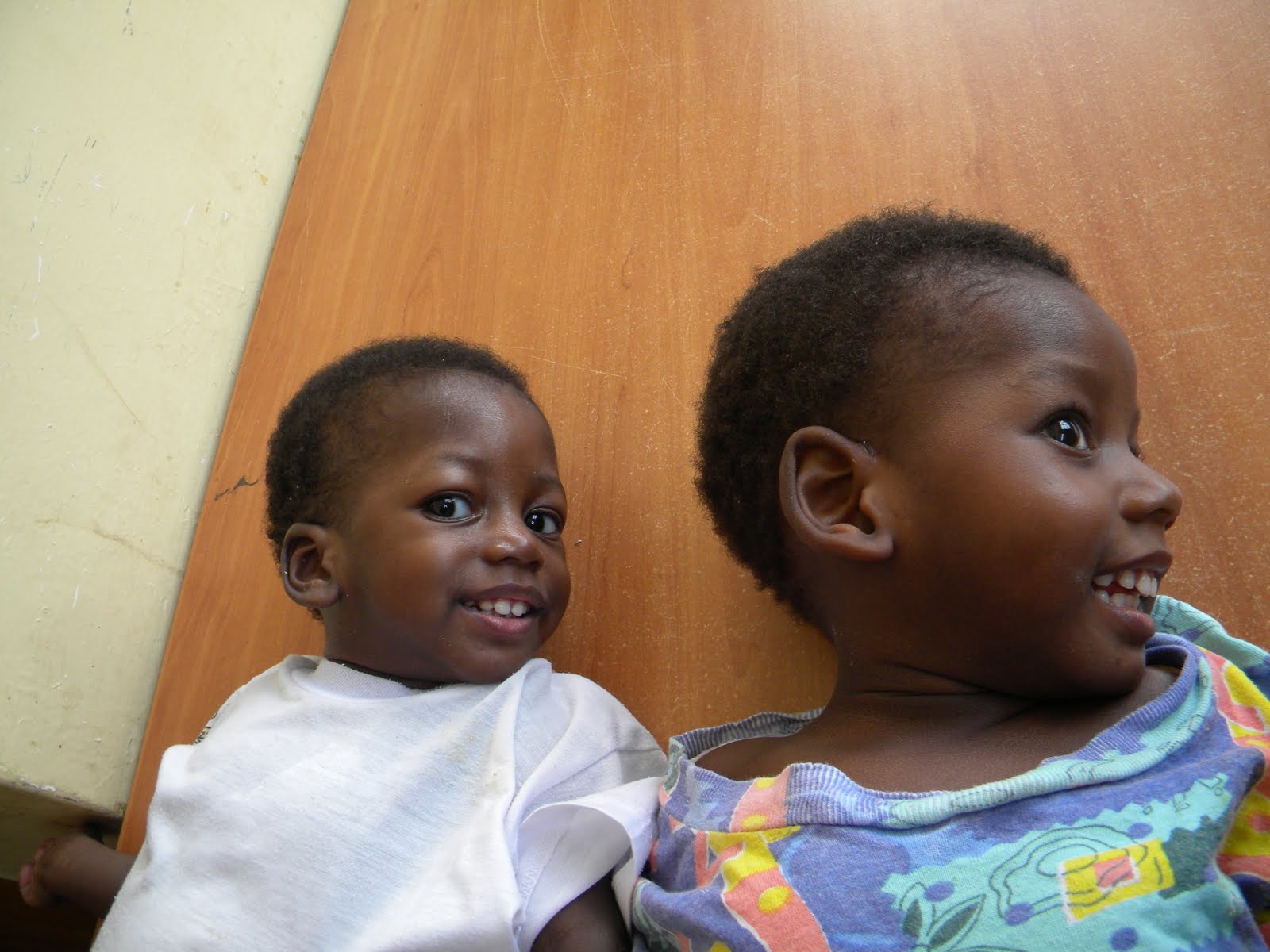
P.S. At the top, two precious SPECIAL (needs) boys who are in need of adoption. Let me know if you think they might be yours!

Tuesday, June 28, 2011

So you think you SHOULD adopt? Please don't!

My e-buddy Rachel has put into words so eloquently how I feel about the current push by mainstream Christianity for Christians to adopt. PLEASE READ HER WORDS HERE!

In April I posted about this issue (and you commented) here, here, and here.

Monday, June 20, 2011

Ghana's Shining Stars

A few days ago I met a truly wonderful young girl. I was looking forward to meeting her, as I had heard she was in need of adoption. She is "older," and with older children I think it's important to consider not only their current living situation, but also how well they would do with the transition to a new family, in a new country.


I was immediately drawn to this child. Not only is she beautiful, but she is friendly, and intelligent, and loving. What a bright and shining star she is! She is so wonderful, in fact, that when families travel to pick up their children, this child has gone along for the first few days to help the family communicate with their new children.

J's English is impeccable. Her manners are spot on. I loved the way she grabbed my hand to hold it as we walked to and from some place. I thought to myself, "Whomever adopts this child is going to be TRULY blessed!"

As I spoke with her about her situation, she became sort of quiet. She lives with her mom half the time, and at the group foster home I was visiting the other half of the time. She is in grade 4 at school. She loves her mom. Her dad died, and I could see in her eyes that she is still grieving for that lost. Her dad was not a sperm donor, but a real father in her life. When you look at this situation in a legal sense, it seems that this child would qualify as an "orphan" by U.S. definition. She could legally be adopted and leave this country with a new adoptive family. But is that what is best for HER?

As I dug deeper, I found out that her father has recently passed away. IN THE UNITED STATES. Do you know how hard it is for a Ghanaian to get a visa to the United States? Very hard. The fact that he was in the U.S. signifies his status within the community. This sweet little girl stands out as bright and intelligent because she HAS had lots of opportunities in life. She has gone to the best school in the area. She has received good nutrition and good education and the love of two parents. One of those parents is gone now. And yes, her mom is struggling financially now that dad is gone. But this in itself is not a reason to rip this child away from her mother and everything she knows, even if it's legally possible.

This child. This bright shining star, only needs educational sponsorship. She can stay here in the country that needs her. She can become a difference-maker here in Ghana. She can continue to live a good life, in the place that she was born.

I think too often we Americans see an "orphaned" child and assume the best thing for them is international adoption. We must stop doing that. For some children it would be a tragedy if they were adopted. For some children, adoption is *NOT* the answer. It is my hope that as a community we can shift our thinking a bit. Let us do what we can to PRESERVE families before we go to the last resort--international adoption.

Love,
Anita

Thursday, April 28, 2011

Clarification on Christian Adoption Movement post....

Yikes! I popped out the last blog post in a big hurry and without a lot of organizational or editorial thoughts. [Like I said at the beginning, my brain just wasn't coming up with a snazzy and organized way to post my thoughts.] In my haste I'm afraid I stepped on toes I did NOT intend to step on!


Orphan's Ransom: There is a very fine organization called "Orphan's Ransom." They are doing really neat work, assisting families with adoption grants so that they can adopt. My post was not AT ALL about the *organization.* I was only speaking about the use of the word "ransom" when speaking of adoption. I do not personally think it is wise to use this word in that way, but that doesn't in any way negate the good work Orphan's Ransom (the organization) is doing.


147 Million: There is another awesome organization called 147 Million. When I wrote about how there are not actually 147 million adoptable children I was not in any way intending to put a bad vibe out there about the organization 147 Million OR using that number as an awareness tool. There are different numbers floating around, but 147 million orphans is one of the most accepted numbers out there. Orphans. Not adoptable orphans. There are 147 million orphans (or thereabouts) that need our love and care and attention--just not all through adoption. =-)


Finally, I want to touch on the "saving" thing (both saving souls and saving lives). I'm a Christian. [Duh.] I am commanded by my Christ to lead people to Him. Just like a Hindu or Muslim family, I'm going to raise up my children in my own faith. As a Christian it DOES cross my mind during the adoption process that my daughter comes from a tribe that is only 2% Christian and would have likely never known Christ without adoption. In fact, none of my children came from circumstances where there was more than a remote chance that they would have come to know Christ in their home countries. Do I see it as a benefit that I was able to adopt children that wouldn't have otherwise known Christ? Of course I do. Let's be real. Sure. =-)


When it comes to "saving" their lives. Yeah, that happened. But I didn't specifically set out to find a child who would have otherwise died without adoption. That's how God planned it, not me. I just wanted to be a mommy to a child who was in need of adoption. God worked out all of the life-saving part. It's just a double blessing that my kids needed me as much as I needed them.


My point is, OF COURSE Christians think about these things when they make a decision to adopt. But if someone is adopting to "save" soul or life but isn't' particularly interested in being a lifetime parent to very hurt children, they shouldn't adopt. At the core, it's about wanting to parent another child. If you don't have that the rest doesn't matter. [Thanks C for pointing that out.]


Love,

Anita

Follow-Up: The Evangelical Adoption Crusade

I really think that the comments on my original post do a fine job of bringing up most of my concerns, and at the moment I find my time to short, and my brain to disorganized, to formulate a really snazzy response! Just a few points....


147 Million Orphans: We see this number everywhere in the adoption world. It DOES cause confusion. I often have inquiries from adoptive parents asking, "If there are 147 Million Orphanage in the world, why in the world are we having to wait for a child? In short, because there aren't 147 million orphans in the world that in any way shape or form look like the young healthy child you desire to adopt. [I am NOT criticizing those who wish to adopt young healthy children.] Most of the orphans of this world are living with extended family; they are living in countries that don't allow adoption; they are MUCH older; they have severe special needs; they are in orphanages where adoptions do not occur. In short, there are NOT 147 million orphans that could actually be adopted. The number of children who could actually be adopted (according to the U.S. definition of an orphan) is just a tiny percentage of that.


Adopting in order to save a child's soul: I've read several responses from Christians that just can't believe that folks actually go through all the trouble to adopt in order to bring a child into Christianity--to save their soul. Believe it folks. There ARE people out there that do this. Again, they inquire with the agency I work for quite often. I know it's hard for mainstream Christians to imagine that someone would adopt for this reason, but it's true. Obviously, I do not think this is an appropriate reason to adopt and I have become pretty vocal to these families about that fact. I have actually told families that if they only want to adopt to evangelize, they shouldn't adopt. They should go on a mission trip.


Adopting in order to save a child's life: This is a sticky one, isn't it? The fact is, if you're adopting a special needs child (or even some healthy children) a SIDE-EFFECT of adoption may be that the child's life is saved. That is the case with 3 of my 4 children. However, we didn't adopt to save a life! We adopted because we wanted to parent more children! We adopted because our family wasn't complete! Please, do not tell me me, "We really don't NEED more children, we just want to help out an orphan." Do not adopt a child unless you feel there is something missing in your family without that child. I "get" the thought that you may not NEED more children, but you need to at least WANT more children. Our kids do not feel thankful that we adopt them. More often than not, they feel resentful! Adoption is NOT ideal. It's based in tragedy. It's sad (even though happy families can be created from it).


Am I against the Evangelical Adoption Crusade? I think maybe I am. But am I against Christian Orphan Care awareness? Absolutely NOT! Take "Orphan Sunday" for example. That should not be all about adoption (and it isn't). It is about a Christian's responsibility to care for orphans. There are TONS of ways to care for orphans that does not include adoption! Adoption is just one way Christians may be called to care for the fatherless. I do think all Christians should consider whether the Lord is calling them to adopt. Sometimes families have not considered it before, but once they do, they feel adoption is a good fit for their family. Great! But no Christian should be made to feel as if they are not obeying God if they don't adopt. Not all families are cut out to permanently love and care for hurt children. God doesn't miraculously heal them all! Sometimes these kids suffer through a variety of emotional and behavioral issues for their entire lives.


Some Christians could care less about ethics: YES! This is true!!! Some Christians see these "poor helpless orphans" and think that any action is justified as long as they "get the child out." NO! NO! NO! The end does NOT justify the means! I have honestly had potential families call me and ask me how to go about adoption only to tell me at the end of the call, "So, we can go about it the illegal way and get this child out quickly or we can play by all of the rules and have to wait a long time. Easy choice." Ugh. These people are out there folks. You probably know some of them. There are plenty of "Christian" families who have absolutely not dedication to an ethical process. There are plenty of Christians that could care less about whether or not the child is in truest need of adoption. There are plenty of Christians that just want to get "their" orphan out so that they can look good and receive praise for the "wonderful" thing they have done. These people need to be stopped!


Orphan's Ransom: I have posted on this blog before that I have big issues with the use of the word "ransom" when associated with adoption (or particularly, adoption fees). I do understand why some families would be tempted to use that work--especially when it is a case of adopting a child out of a country where the child is literally sentenced to a mental institution at a certain age(almost guaranteed early death). I understand that as a parent, it might sometimes feel like you are raising money to "get your child out." However, these children have not been kidnapped. The fees are not going to "buy" the child's freedom. The fees are paying for the legal process of adoption! If they aren't--then there is a MAJOR problem!


Those are a few of my thoughts. Again, I absolutely think that every Christian as a responsibility to care for the fatherless in some way. I think it's great that there is a movement within the church to bring more awareness to this responsibility. I just think we need to be very careful about how we go about bringing awareness to the orphan crisis.


Love,

Anita

Thursday, April 21, 2011

The Evangelical Adoption Crusade

I read a blog tonight that sited THIS article. It isn't the shortest article in the world, but if you are a Christian (well, even if you're not!) I encourage you to read it and give it some thought. I have LOTS of thoughts rolling around after reading the article, but it's already way past my bedtime. I'll have to organize my thoughts for another day. In the mean time, when you have a few minutes, read "The Evangelical Adoption Crusade." and let me know what you think!

Saturday, March 19, 2011

What is going on?

I wrote THIS POST about an particular orphanage in Kasoa Ghana, almost 3 years ago. Three years ago this home was in desperate circumstances. I know that for many months assistance was given by AAI families. In fact, money was raised to create a bore hole on the property. I saw the pictures of it going in. I also saw the photos of actual food (not a money donation) being delivered to the home each month. But that was 3 years ago.
Now it's 3 years later. We work with a different coordinator in Ghana than we did 3 years ago. Our current coordinator has no relationship with this home, and therefore no children in our program currently come from this home. Still, I see several parents in the adoption community who are adopting from this home.
What I don't understand is why, three years later, there are still constantly pleas to assist the children of this home because of the deplorable conditions. WHY IS THAT?! There is a commited group of volunteers that work hard to run a volunteer and sponsorship program for this home, and yet very recently I read a story about how very basic the school STILL is (3 years later, after dozens of adoptions and a commited group of volunteers). I even read how the home still does not have clean water and they are collecting money for it.
It doesn't register. It would seem crazy to me that an agency/facilitator would be "working" at this home, and not be sending a decent percentage of the adoption fees collected to support the home. [Maybe they are?] It seems crazy to me that all of the kids still look so pitiful, and the home is in as bad a condition now as it was three years ago.
WHERE IS THE MONEY GOING?!?!?!?! Is it not getting to Ghana? Is it getting to Ghana but not to the home? Is it getting to the home but not to the children? I just can't be quiet about this anymore. Something is wrong with this picture. I don't know what it is. I don't know if anybody out there reading this can help. I just know I can't be quiet about it one more second.
In adoption we talk about how nobody should profit off of children. Absolutely! But at least, with all of the fees collected, the CHILDREN SHOULD BENEFIT!!!!!! I am in no position to have a clue what is going on there. Maybe you are. If you are, I encourage you to speak up on behalf of these children and do your best to figure out why the children are STILL left in deplorable conditions after this long. It shouldn't be this way.
Let me use my friend John's home (CKO) as an example. When I first heard about CKO it was from an email list having nothing to do with adoption. There was this guy with this small orphanage where the kids had been kicked out of their home. They had no place to go. They had no funds to get anywhere, and were eating very little. Some parents were able to help. Others helped as well. Two years later "CKO" is a very recognized orphanage within the Ghana adoption community. Two years later (although they still struggles sometimes) John and the kids are in a LOVELY large home, with a bright and happy in-home school. Not only are the kids eating a decent diet and clothed well, but the director (and children) reach out to minister to those less fortunate in the community. Orphans--ministering to those "less fortunate!" John, although not perfect (nobody is) has come from a horrible place, to a place where the children are thriving and able to give to others out of their abundance.
Two homes. Both homes previously "unknown" but through adoptions have become known to the community. Both homes who have loving individuals commited to help the children and make change. One is thriving two years later. One is still deplorable three years later.
What is going on?
Okay, off my soapbox.

Thursday, March 17, 2011

The tough stuff in international adoption (Ghana-flavored)

The other day I posted THIS POST on the blog. That post motivated blog reader Laurel to put several questions in the comments area. I figured so many questions were worth their own blog post! Below is the way I would answer her questions. This post is not how all agencies would answer, or even how the agency I work for would answer. I guess I feel comfortable saying I am speaking for the program I coordinate within the agency I work for, but nothing should be taken as official AAI commentary. How is THAT for disclosure! Have I covered myself enough?!
****************************************

1. Why are there families on waiting lists (waiting for the "perfect" child that "fits their criteria"), rather than international adoption focusing on the children that are waiting for families?

I think a lot of agencies out there would love it if the children on the waiting lists all of the sudden all had willing and qualified adoptive families. That just isn't the case. The fact is that it takes a LOT of skill and experience to adopt children who are much older and/or with special needs. As much as agencies want to place their older waiting kids, they also want to match kids with families who can actually deal with the many difficult issues that come with older waiting kids. If the adoption disrupts at a later date, nobody wins.

Another thing to think about--particularly in a country like Ghana--is that the "waiting child list" is not necessarily indicative of the number of orphaned children who are in need of international adoption. In Ghana we have no central authority who has a master list of childrenin need of adoption. The children/families in need must be identified one by one, step by step, and then referred to Social Welfare for further investigation. It's a very slow process. The "waiting child list" might be very short, but that doesn't mean the need is any less. Instead, the process to identify those truly in need adoption is extremely complicated.

*********************************
2. If there are families willing to pay large sums of money for the "right child", then doesn't this promote the thought of agencies actively looking for the child to fit the family (and sometimes doing unethical things to "find" that child), rather than focusing on finding a family for the waiting children

Yes, absolutely. There are many potential adoptive families who are able to pay a lot of money for their adoption. Some agencies feel the need to try to "fill the order." However, I would argue that a responsible agency should not do that. The team I work with in Ghana is not told how many waiting families we have, or what age/gender child those families are waiting for. Why in the world would I tell them that? With that knowledge there would be an automatic inclination (even if it were unconscious) to be biased towards locating children of a certain age/gender. We need to protect our in-country partners from that temptation. Allow them to work to assist children/families who need assisting--regardless of the age/gender of the child.

At the same time, some consideration has to be taken with the age of the children. It's not realistic that a program can survive if all of the children entering the program are 10+ years old. Agencies stay open through adoption fees and donations. With a program where most kids are 10+ years you'd just have a lot of families waiting and a lot of kids waiting. It would be adoption constipation! For one thing, it's a lot harder for adoptive placements to be successful with a much older child. And obviously, there are very few families open to a child that old. With that in mind I do think it makes sense to assist children of ALL ages (withsponsorships, family preservation efforts, etc.), but also consider that there has to be a balance of children who would be considered "more likely to be placed" and "less likely to be placed." For that reason our program (and I'm assuming others) focuses on children 10 and under for adoption, knowing that if ever there were a family requesting a 10-15 year old there are many children within Ghana
that could benefit from adoption.

I have to mention the "willing to pay large sums of money" thing because I think there is a *HUGE* myth out there that all adoption agencies are somehow making money off of adoption programs. Seriously, that is simply not the case with reputable agencies. Instead, those agencies are trying to figure out how to make ends meet to both cover the actual expenses involved in the adoption process and all of the humanitarian projects they sponsor within the country. I promise! I'm telling you this as someone who 4 years ago would have never guessed the TRUTH! I thought they brought in the bucks too! I hate it that some agencies out there have inflated fees in order to have cushy offices or higher paychecks, and caused ALL agencies to suffer because of the myth. The program I run didn't come close to being balanced last year. Much more was sent to the country than was collected in fees or donations. Donations we receive don't have a penny taken out for administrative costs. It ALL goes to the designated project. Please, help me in educating others that there are many agencies who are NOT financially benefiting from the work being done.

******************************
3. If there are (1)47 Million orphans waiting for families, then why are there families waiting many months, or years, to move up the waiting list for the child that they want

Because there are not 147 million children waiting for families. The large majority of those 147 million children would not qualify for international adoption, nor are most of them in need of international adoption. That number is quoted all of the time--which is good for Christians who are called to care for the orphan (and widow). Most of those children are living with extended family members or others within their community--not rotting away in horrible orphanages. Adoption is not the only way to care for these children. Only a small number of countries are open to international adoption. Adoption is not the answer here.

Families wait on waiting lists because they are honest about the child they ARE prepared to bring into their home. And that child may not match up with the many older/special needs children who are in need for adoption. I really don't buy into this notion that families who wait for a referral should in some way feel ashamed of that. No way!!! Wait! I worry much moreabout the families who refuse to wait and only go to programs that promise quick matches and endless available children. Families should NOT compromise on the child that is right for their family dynamic. That is a recipe for disaster and disruption (IMHO). I have no problem if a family comes to me in the Ghana program and says the would like to adopt a child 0-3 years old. If they know that we only hear about 1 or 2 children like that a year, and are willing to wait, more power to them. Obviously, I celebrate when a family comes to me and is ready to adopt a child 0-12 years old of either gender, single or sibling set, as long as that family is really ready and able to do that! Please, let us not vilify families with more narrow requests. There are lots of factors within families that make one "type" of child more "right" for a family than others.

I'm going to share a short of off topic pet peeve. Families that wait don't bug me. But families who refuse to wait, who are bound and determined that they will ONLY adopt from a waiting child list, that can get old. Really? They are all orphans. A child who happens to be waiting isn't in more need of adoption than a child who is referred to a family immediately. I know there are valid reasons for wanting to only adopt from a waiting child list, but sometimes I get the feeling it more about the parents' desire to find the "most needy" child rather than their desire to find the best program and agency and child for their circumstances.

I think maybe I get what you're saying though. Some families ARE incredibly narrow with their request for a child. It can start to feel like "filling an order." I think this is something agencies can help with by creating policies that discourage that type of "picking and choosing." Some agencies don't allow families to request a certain gender in young children. Some don't allow an age range of something like 2-3 years old (only one year instead of several). Hopefully families are not trying to do a "designer child" through their referral request, but are instead considering what their real limits for success are.

*******************************
4. Should international adoption be focused on "the needs of the orphans" or the "desires of the adoptive families"

Needs of the orphans. Hands down. Period. [Except you know I'm going to say more!] As much as I want the families I work with to know who their children will be, it is not as much about the families as it is about the children. If one month (or 2, or 3, or 6) goes by where not a single child comes into the adoption program, I celebrate! That means that our partners in Ghana were successful at counseling and assisting families to remain together!!! Maybe it isn't like this everywhere, but my families know that when they sign up with our agency, they may wait longer than other families with other agencies. We are not "shopping" for kids. We are assisting kids who have little or no hope for long-term loving family care within Ghana. I think that many adoptive parents recognize that it is more about the kids than it is about the families. However, in the heat of the moment when you are tired of waiting and beyond ready to see your future child's face, lots of adoptive families would compromise their values. That's why agencies (or orphanages, facilitators, etc.) *MUST* be strong when the family can no longer be strong. Sometimes the people assisting with the adoption must protect an adoptive family from their own desperation because in the heat of the moment we adoptive families would do almost anything to get "our" child home.

***************************
5. Should our focus as adoptive families be on "how can we help the children" or "what do WE want in order to complete our family"? It just doesn't make sense to me ...

Both. We must have a duel focus. First, we can think about "how to help the children" without adoption even entering the scenario. Don't even get me started on the whole "saving a child" thing. In the course of an adoption it may turn out that our child was "saved" from something, but it should not be an adoptive parent's first priority when choosing to adopt. When you choose to adopt you must do so because you sincerely desire to add to your family. YOUR FAMILY! Not your ministry. YOUR FAMILY! If adoption works well, it's a double blessing, isn't it? I got to be mommy to four amazing children. As it happens, that act of adoption may have saved the life of three of my children. The "saving" was a side-effect of the family building, not the motivation for the family building.

Adoptive families have to be realistic about adopting a child that they want to parent and a child that they can effectively parent. It's just silly--to me--to think "I'm going to adopt the oldest, most special needs, most messed up kid out there and watch God heal him!" God gives us wisdom. God expects us to take care of the family we have currently--the kids already home. Yes, I know--"He equips the called." But I think some families decide to go for the biggest leap of faith they can find, assuming that's what they've been called to. A lot of those families seem to end up in disaster a few years later.

I have lived "He equips the called" through our adoptions. If the Lord wants to place you with a child who needs much intervention, He can do that without us trying to find the biggest "project child" out there. Eric and I adopted a healthy infant. We got a child who is 10 years later finally working towards a solid attachment. We adopted another healthy infant. We got a child with a disease that rocked our world and was expected to kill him before adulthood. [Then God healed him!] We adopted a child with severe malnutrition, expecting issues related to severe malnutrition. We got a child with severe anxiety that he was probably born with. We adopted an HIV+ child who had been given drugs and alcohol throughout pregnancy, and who was neglected after birth. [We were outsmarting God, right?Getting the kid that we KNEW had problems!] We ended up with a child who appears to have NO long term effects from any of her past illnesses/abuses. He EQUIPPED us to deal with each of those children and their special circumstances as they came along. We didn't have to try to find the biggest "project" kid. We didn't have to work hard to jump outside of our comfort zone. Each time we chose as wisely as we could the age range and special needs we felt equipped to deal with, knowing that IF he intended more for us, he would give us the tools to deal with it at that time. And each time, the Lord stretched us and grew us in ways that benefited Eric and I as well as our children. [Sorry so long on this. I probably haven't stated things as diplomatically as I would have liked to, but there it is.]

***************************
6. If a family really wants to adopt an infant, aren't there infants on Waiting Lists in some countries? If not, then maybe they need to pursue an independent adoption in the U.S., rather than insisting that an international adoption agency "find" them the "perfect child".

I think there are very few countries at this point where someone can adopt an infant under one year (or even two years). The face of international adoption is changing. Ten years ago it was a lot of tiny babies and toddlers, with a few older kids thrown in for good measure. As international adoption develops in the next 10 years I think we will see a shift towards toddlers, preschoolers, and older children (with toddlers being in the minority). I agree with you that it makes no sense for a family to put a square peg into a round hole. If you want to adopt from X country and X country has very few infants, X country might not be the best option for you. BUT, if X country is definitely the country you want to adopt from, and you're willing to wait for years, welcome to the program. Don't expect us to "find" a young one just because you're here. It doesn't work that way. The square corners on your peg will need to wear away with time until it's round and fits in this country's hole! =-)

*********************************

7. Even though you have told us many times that Ghana is NOT the place to adopt an infant or toddler, there ARE agencies/orphanages in Ghana that are "finding" babies for families that want them. How does this happen?

Oh, it happens very easily. Pick a village. Any village. Now, as an NGO person, walk into the village and make it known that you are in some way involved in adoption. Before you know it there will be a small line of ladies with babies on their hips saying they want their child to be adopted. [I can personally attest to this.] (1) Do they know what adopted really means? NO WAY! When they find out what it means, half the ladies walk away. (2) Now, do they expect that there will be some sort of gift or payment for them giving their child to a rich American family? ABSOLUTELY! That is very much a cultural expectation in Ghana. When they find out they will receive absolutely no gifts or payment for giving their child for adoption, more ladies walk away. (3) Do they expect at least that their child will come back to Ghana and support the family when they are an adult? Or that the adoptive family will assist the child's family in Ghana? ABSOLUTELY! When they find out that there is absolutely NO GUARANTEE that they will EVER see the child again, and absolutely NO assurance that the adoptive family will ever assist the bio family, more ladies walk away. (4)Who is still sanding there? The lady still standing there is the one who is probably making a life or death decision for her child. Maybe she abuses the child. Maybe she has nothing to feed the child. Maybe she just really does not want to parent the child. [That happens, whether we like to think about it or not. Not all bio parents are wonderful people.]

Now, the agencies/facilitators that are "finding" the babies and toddlers.... Where do you suppose the above conversation ends? Is it the first question? The second? Or maybe, the answers given are different? I believe that is how infants/toddlers are "found" for adoption in Ghana.

BUT, sometimes there legitimately are infants in need of adoption in Ghana. Imagine, even knowing all of the above the parent/guardian feels adoption is the best plan for their child.

Even then, what about domestic adoption? Efforts should be made to make sure there is no domestic family willing to adopt the child within Ghana. Yeah, I know, the Ghanaian moms don't want their children to go to Ghanaian families. If that's the case, if they will keep their child rather than let them go to a Ghanaian family, then adoption really isn't the only option left for the child, is it? Mom is willing/able to keep the child if the result isn't what she wants. The Social Investigation Report that frees a child for adoption very clearly states that it could be domestic or international adoption. [Sorry, I know I don't sound very sympathetic here, but I just feel very strongly that making an adoption plan should not be about getting your child to America.]

Sometimes...every once in a while...a baby, despite all of the above, will make it all the way down to international adoption--the last option. Social Welfare confirms they have no domestic family waiting for that child. Those babies usually have some sort of special need. After all, we're told there is a long list of Ghanaian families ready and waiting to adopt healthy young infants. However, sometimes there are even healthy infants that have legitimately been freed for international adoption by Social Welfare. When those babies come along, we're thankful for them and just as happy to identify their adoptive family as we are for any other child.

That happens about 1 or 2 times a year in the program I know--babies 0-2 years.

******************************

8. How do agencies determine when they cross the line between "helping families" and "buying children"? How can agencies/orphanages justify giving money to families that are relinquishing their children? I totally understand the desire to HELP, but I don't know how/where the line should be drawn.

For me, this is a pretty clear line, although there are times when it's blurry. I think that the first line of defense against "orphanhood" should be family preservation. We may give food, or educational assistance, or medical assistance to a family struggling to stay together. We're trying to keep an orphan from being created. But if that fails, and efforts to help the family remain together are not effective, the "help" comes in the form of counseling about adoption and assisting the family to work with Social Welfare on steps towards an adoption plan. Once there is an adoption plan, there is no more "family preservation" assistance. Because of the laws we work under in the United States we are absolutely prohibited from giving any gifts or compensation to a family that is placing their child for adoption. Not even a bag of rice if they're hungry. [And yes, this sucks. But it's the law.] It has to be that way or families would give their children for adoption in order to be better supported.

Having said all of that, at the end of the process, when a child has been adopted and adoptive family meets biological family, if the adoptive family buys a bag of rice for the village to share, do I see that as "child buying?" Absolutely not. Is that one bag of rice going to cause the village to start giving their children left and right? Absolutely not. Bottom line for me is, I don't want to do anything that would cause there to be a future "culture of adoption" in Ghana, where a family gives their child for adoption because of any perceived or actual future benefit. As much as we rich Americans want to come back and help in big ways, we need to do that through organizations rather than through directly supporting our child's birth family. I know others may not agree. Sometimes I don't even agree with myself on this one. It's tough.

*************************
9. Where do agencies draw the line between "paying bribes" and paying unofficial "fees" to expedite the paperwork process?

This is absolutely the stickiest question you asked! By far! Again, I'm sure you'd get a ton of answers from a ton of agencies. Even if you're just asking me what I think about this, it's a tough question to answer. There are some instances where a fee is really a set and standardized fee--but its not up on a fee schedule in the office like it would be here in America. We have expediting fees we can pay to get our passports more quickly and nobody bats an eye. It's right there in writing! Well, in Ghana, there's nothing in writing about expediting. The fee is just as standardized though. There's one fee to pay for a normal processed birth certificate, and another fee to pay if you need to expedite it. To me, those fees are so standardized within the country (although unofficial), that I don't see any way around them. I doubt an adoption program would be very successful if they had to wait years for a passport rather than "only" months. The bad thing about these unofficial fees is that they tend to go up and up and up because people will pay them. Hmmm...but now USCIS comes to mind. How many times have their fees gone up in the past 5 years?

To me, a bribe is something you pay that could change the outcome of what would have otherwise been. The judge doesn't allow a family with more than X number kids. You pay him some money. Now they family can be granted the adoption. BRIBE. The Social Welfare officer would write one thing in the report, except that someone gives him some money to write something different. BRIBE (and fraud). A letter is required to enter the embassy. You have no letter, but you have money. You are then granted entry without the letter. BRIBE. The judge requires parents to appear in court. You don't want to go. You give him a gift. You can then stay home. BRIBE.

But what about extortion? Social Welfare Officer has a valid case to investigate, and is willing to do it--but not for the usual cost of transportation and time. Instead, he wants to make a flat out profit. Let's have $500 instead of the $100 that would have paid for transportation and time. No $500? No investigation report--at least not until he is to the bottom of the pile that will pay the $500. That scenario is VERY common in Ghana. What is an agency to do? Well, our answer has been to go elsewhere or to wait until we work our way to the top of the pile. Some entire regions are full of officials like that. Go elsewhere. Thankfully, there are regions (and officials within regions) that are doing their work for a decent living wage and in order to benefit children. Believe it or not, there are some very ethical individuals working within the courts and social welfare offices of Ghana. Corruption is there, but you can work around it if you are only patient.

Now the blurry lines.... Adoption Decrees. Do you pay to have them come out more quickly? It's not quite a bribe because the outcome would be the same either way. But it's not a standardized and expected thing either--lots of people wait in line and get the decree out within several weeks. With blurry lines I tend to head towards the white side, but I can understand how some might go for black and not feel that they have compromised their ethical code. The thing is, eventually this issue could go up into the extortion category. Will there be a time when a person MUST pay in order to get the adoption decree at all (or within a year)? Are the people taking the money to "quick process" the decree going to see exactly how high they can go? This one is a slippery slope to me. I'm going to have a very bad day the day I learn our families can't get their decree within several months without paying something. That is not something that was there before international adoption. That is an example of corruption being CREATED by international adoption.
************ ********

If you're still reading you must have had a few free moments on your hands! Again, these are just my little 'ol opinions. I don't know it all. Five years from now I might feel different. But this is a snapshot of my feelings on these issues at this time. If I stepped on your toes, please know it was not intentional.

Anita

Monday, March 07, 2011

Ethiopia and Alternatives


Today I was one the phone quite literally all day long. The phone started ringing at 8am and didn't stop until well after 5pm. As I talked to one family another was beeping in. My voice is worn out. My ear even hurts! But I'm not going to get on here and complain about *MY* day. My family is built. My children are all home. We were able to adopt internationally four times. I AM BLESSED.


Today there are so many families hurting--families that planned to adopt from the most established program in Africa. Now it seems that Ethiopia adoptions may be changing drastically in the next several months. There are thousands of families trying to discern next steps. "Do we stay, or do we go? If we go, where to?"


I have no idea if any of those families read my blog, but if you are here, I just want you to know I am praying for you. I do not at all envy the position you are in. Many hearts are hurting in the ET adoption community right now. I would gladly spend many more days on the phone non-stop if I thought it would help any one of you even the tiniest bit.


I am also praying for the children of Ethiopia right now. I pray that true orphans would not be left wasting away in orphanages. I pray that kids with serious disease do not die as they wait. I also pray that the measures ET is taking saves lives in a different way. I pray that children who would have otherwise been trafficked into adoptive families will now be "saved" from that atrocity. I pray that people perpetuating corruption in Ethiopia are caught and jailed. I pray that any American adoption agency who has knowingly taken part in corruption in order to meet the "demand" of American parents is taken down. If ET adoptions close (or close to it), we can thank corrupt people for it. NO DOUBT there are many, many children in ET that are in true need of adoption. Now it looks like those children truly in need of a family may be left waiting because of the children that have been made to look like orphans by unscrupulous people. Frankly, it really pisses me off.


It is what it is. Many families are going to feel like they should look for alternatives. That's why my phone has rang off the hook today, and I'm assuming it is like that for most non-Ethiopia agencies/programs across the board today.


My friend and colleague, Salem, answered some questions about Uganda adoption HERE. If you're wondering about Uganda as an alternative country, she is the best source I could point you to. She is an ETHICAL adoption advocate, willing to stand up for what is right even if it's hard. She is not interested in "selling" Uganda as the next big thing. She'll just give you real information. She told me today that Uganda is a great option for those hoping to adopt children 5 or older, special needs children (especially HIV), and "babies" 0-2 years (not young infants). Fees are very reasonable, and the process is quick. [I'm betting that the wait lists for this program will grow quickly over the next few months.] You can email Salem@adoptionadvocates.org.


Ghana, I think I've shared a ton about Ghana on this blog! Here's the quick version. There are about a million orphans, but it's NOT a waiting child program. There's no good way to identify large numbers of children in need of adoption, so it's probably always going to be a small program. It is NOT a baby program. Don't expect to adopt a child under 3 (although a few times a year a child 1-3 may become available). It takes about 6-12 months from child match until homecoming. The wait for a child match can be anywhere from a few months to 18+ months depending on your request. Most common request in our program is for boy/girl siblings 0-5 or 0-6 years. We need families for single children, boys, and families open to children 6+ years.


Maybe some families will start to look at China again? For healthy children China probably isn't a great option, but if you're open to special needs it seems that the program is going really well! There are what? 1200 kids ready and waiting on the SN's list? As an outsider looking in it seems that families who normally wouldn't qualify to adopt from China are sometimes allowed to adopt if adopting SNs kiddos. China is even starting to do HIV+ adoptions!


A question I have heard a lot today is, "How do I keep from getting involved in a corrupt program?" I'm so glad that people are asking this question! In the link above Salem gives some great advice. Here are some questions that I suggest you ask.


1. How do you hear about the children in need of adoption? Your agency needs to KNOW how the kids are identified. "Our facilitator locates them." is really not a good enough answer. How are they located? Does he/she go out to the village and ask people if they want their kids to go to America through adoption? If there is any sort of "finding" or "looking for" going on, I would see that as a red flag.


2. What sort of humanitarian aide are you doing? Every agency says they do it. Let them tell you how. Is all the aide going to support "their" kids? If so, I don't really see that as aide--that's just using the fees you pay to care for your child! Is all the aide going to orphanages? Great to give to orphanages, but what about preserving families? What are they doing to address the reasons WHY children become available for adoption? What are their family preservation efforts? If the agency's fees are alot lower than most others, you might consider that they are lower because little or no humanitarian work is being done.


3. Can I adopt a baby? If you're planning to adopt from Ghana, and an agency tells you "no problem" with adopting a baby--well...go the opposite direction. YES babies become available every once in a while. It is the EXTREME exception to the rule. Last year there were 8 visas given to children under one year, out of over 100 visas issued. I'd be willing to bet that most of those kiddos had significant special needs. Most of the 0-2 kids we've seen in our program have had HIV or other special needs.


4. What causes most kids to be orphaned in Ghana? There are lots of "right" answers to this question. There is one answer that is normally "wrong." In the past 4 years we've seen exactly TWO children who have been truly abandoned--as in left some place where there is no known family. If an agency is telling you most of their kids are abandoned, that would be out of the ordinary. I'd personally want a REALLY good explanation as to why that was the case with their kids but not very typical within the program as a whole. There are certain times (like kids in a big government orphanages) where it may be more common for kids to be abandoned, but most all the time someone knows someone who can find a family member!


5. When do you match families and children? Technically, American agencies do not legally match parents and children. The agency's role is to share with parents about children they know of who are LEGALLY FREE for adoption. In this way there are informal (but not legal) matches. Then the child's paperwork and the family's paperwork is presented together for Social Welfare to consider. Social Welfare then makes a legal match. I personally feel very strongly that agencies should NOT be presenting children to families if the child is not absolutely free for adoption. This means that the agency should have a document called the Social Investigation Report for the child. If an agency is matching you with a child that they "don't know much about but our facilitator said they are in need of adoption," that is not okay. That is a recipe for heartache.


6. Do your in country people know what children families are waiting for? Will they be told that we're hoping to adopt one child 0-5 years old? Again, this may be a person thing, but I think that is a recipe for disaster. The kids that become available for adoption should become available for adoption only because they have no other option. They should not only be "found" when the facilitator knows there is a family waiting for a child of that description. My collegues in Ghana are not told how many families are waiting, or what age/gender the families are waiting for. They simply help the families and kids that need help--regardless of age or special needs.


7. Corruption. Obviously, no agency is going to tell you they take part in corruption. You have to ask the question differently. Does the agency (or the facilitator) have the attitude that "the end justifies the means?" Do they talk about how "that's just the way it's done" or tell you "it's part of the cultur to pay bribes?" There are lots of people out there that are completely at peace with paying bribes if it means the adoption goes through more quickly. An agency with very "quick, easy" adoptions might sound good at the front end, but that might really be an indicator that there are extra payments going on. Agencies that pay may be the ones that tell you it's no problem if your family is outside of the normal requirements, or they may get certain documents much more quickly than the norm.


Bottom line, if it seems too good to be true, it probably is. The times of a quick, easy international adoption seem to be falling quickly to the wayside. I read one blog several months ago where it was reported that in the next 30 years international adoption would phase out completely. I just cannot believe that. Instead, I think that parents will continue to become thicker-skinned. Adoptive parents are the strongest people I know. We have to realize that these children are our PRIVILEGE, not our RIGHT. When there is a country that honors us with the opportunity to adopt their orphaned children, it is our responsibility to give that country the utmost respect, even if we don't agree with the way they do things. It is not our business to influence them. It is our duty to honor these children by abiding by the laws within their country of birth. If we do that, I believe that international adoption will always be an option for American families.

Anita

Friday, February 11, 2011

Good Words from a Wise Woman

I have a friend who has adopted from Uganda. She cares deeply about the long-term success of the program--but she stands up and shouts that adoptions should be completed without corruption. She was in one of the first big handful of people to adopt from Uganda, sort of like we were with Bright in Ghana. Kind of funny--our lives are sort of moving parallel except 4 years apart! [Except, I think she is much wiser than I was four years ago.]
Read her words. Apply them to Ghana. Apply them to Rwanda. Apply them to any "up and coming" program in Africa. Ethiopia is less stable than it was a few years ago and inquiring parents are now flooding agencies with interest on these smaller African programs. That is great in some ways, as long as they don't expect these program to be "the next Ethiopia." They won't be. They shouldn't be.

I've taken just a few words out to further protect my friend's privacy. Note: Like Ghana, families can adopt independently from Uganda.

-----------

I wanted to write a little bit about ethical adoptions in Uganda. I've been getting LOTS of emails lately talking about this. I've also been getting a ton of interest in adopting from Uganda. With everything going on in Ethiopia, we should be prepared for a new rush of interest in the UG program. Which is on one hand, good. Because there are a lot of children in Uganda that need families. But here's the problem. The majority of families are interested in adopting an infant. I can say that about 95% of the families I talk to are only interested in adopting babies. This scares me for the UG program. Because I've seen how quickly this can get out of control.

One of the reasons I was initially drawn to the Uganda program was that while we wanted to adopt a child under age 2, I didn't want to contribute to the unethical behavior, the "supply and demand" feeling I got from certain other countries. I knew that in Uganda there were babies actually sitting in orphanages, eligible to be adopted. From what I can tell, this isn't really the case now. There are now lines of families waiting and waiting to adopt infants from Uganda

Yes, there are infants in Uganda that need adoptive families. But there are far more families wanting to adopt them then there are ADOPTABLE* infants in Uganda.

I have continued to hear disturbing reports from Uganda of people in the slums "looking" for babies that can be adopted. Every-time I hear people tell me they are asking an attorney to "find them a baby" I get really really nervous. We should not be finding babies for families or asking others to do so! This is opposite of how this program should work!

Find families for children in need, not children for families that "want". (I heard that somewhere, can't remember where but it is true!)

I understand wanting a baby quickly - I really, really do. But folks, this is going to end up just like the other countries that have been shut down - Cambodia, Guatemala, Vietnam, etc. if we don't demand ethical adoptions with the priority on children waiting for families.

So, I'd thought I'd write up some of my ideas of how we can encourage ethical adoptions in Uganda. What do you tell families asking you? Any more suggestions?

1. Only adopt from a registered and approved baby home. Don't ask attorneys or people in Uganda to "find" you a baby. This will get out of hand very quickly (it's already started). If you are adopting from an unregistered home, why aren't they registered? Make sure nothing illegal
is going on. There have been people in UG offering Americans children from orphanages that don't even exist. Be aware that scams happen.

2. Be prepared to wait for your baby. You don't want people in Uganda to feel pressured to produce a referral for you quickly, you want a child that truly needs a family to be matched with one. Sometimes this takes a while, especially if you're working with a registered and approved home. They often have waiting lists. After babies come into homes, once the investigations are done and everyone is SURE international adoption is the best thing for this child, they are cleared for adoption and they will be matched with the next eligible family. This can take time as you make your way to the top of the list.

3. Obtain an independent background investigation of your child's background. Hire someone else to do this, not associated with your attorney or the orphanage (some agencies already do this). The attorney and orphanage WANT this child to be adoptable, find someone who is not directly involved or profiting from this adoption. Better yet, go investigate the background yourself.

4. Talk to the PO (probation officer) or police officers that have dealt with this child's case. Talk to family members and guardians. Do they understand what adoption means? Make sure there is no confusion, find a good translator to make sure they understand. Was an advertisement put in the paper asking relatives to come forward? Did it run for long enough and was in the area the child is from? Is there a Ugandan family willing to adopt this child

5. Ask relatives/guardians why they want the child to be adopted. Is it simply because they are poor? If so, if a sponsor was found for their family would they want to keep the child? Try to keep the family together if at all possible.

6. Consider branching out of your originally requested age range/request. Can you consider a child slightly older? With medical needs? There are so many beautiful children just sitting in orphanages waiting for families.

If you're with an agency I'd ask the following questions:

1. What is your focus - do you only place infants or do you place waiting children too

2. What orphanages do you work with? How are children referred to your agency

3. Who does the child's background investigation? Who explains adoption to any relatives or guardians?

4. Are families relinquishing their children given any other options for keeping their family together?

5. What does your agency do to encourage family preservation?

6. What humanitarian aid do you offer in Uganda?

7. Do you have someone traveling to Uganda regularly to check on things

8. Are you Hague approved? If not, was it denied?

9. What attorney do you use in Uganda (research them too even if you're using an agency!)?

10. Why is your wait for a referral so much shorter than other agencies (if this is the case).

Any other suggestions for ensuring ethical adoptions in this beautiful country? I'd love to hear them!

*Not every baby in a babies home can or should be adopted by foreign families. Many have families who will come for them some day. Some can be adopted in Uganda. Some have relatives who don't want them but won't release them for adoption (which makes me so sad).

-----------------------------
While some of my friend's words don't apply directly to Ghana, many of them do. We in the Ghana adoption community need to be aware that as things continue to go downhill in the Ethiopia program the applications to adopt from Ghana may increase exponentially. This isn't a bad thing--as long as expectations about what Ghana adoptions are (and are not) are clearly laid out to families. It's not a baby/toddler program. It never will be unless some very bad things are happening. With the most current stats, 8 kids out of 100 were under 1 when adopted from
Ghana. I was actually surprised it was that many! Let us come together as a community to both welcome and educate those that are new to the realities of Ghana (and Uganda, and...) adoption.

P.S. For the record, I believe AAI's Ethiopia program to be completely ethical and without corruption.

Monday, January 17, 2011

MLK Quote

I've been reading with interest all of the Martin Luther King Jr. quotes that have been posted today. All of them are really good. But this one was especially meaningful to me. [Thanks CB for posting this on your FB!]

"He who passively accepts evil is as much involved in it as he who helps to perpetuate it. He who accepts evil without protesting against it is really cooperating with it." MLK

Preach it, Dr. King. Preach it.

Monday, November 15, 2010

Adoption Awareness: Adoption Scenarios Update

Thanks to all of those that have commented on the question, "How committed are you to not take part in an adoption that includes corruption, illegalities, or unethical behaviors."

There are some very thought-provoking comments in the comments section of that post. If you aren't sure where you stand on some of these issues, please consider heading on over there to read various points of view.

For what it's worth, I'm going to share my own convictions about the scenarios I presented. I'm sure not all will agree. I do tend to take a pretty legalistic view on adoption when it comes to an agency's role. I think this is most likely due to the fact that I was horribly naive and took part in a corrupt adoption program during our first adoption, without knowing it. I've got a life time of "making up" to do. I do feel very convicted to be vocal about corruption, because I don't want another family (and certainly not a family I am charged with assisting) to have to live with the guilt I have to live with. I do place a very high degree of responsibility on an agency to always err on the side of caution with ethically gray areas. If our agency in Cambodia had done that, our family would have been saved from a lot of pain. They should have done more to protect against corruption, or they should have gotten out of the "business" of adoption all together.

  • Scenario 1: Would I allow my adoption to proceed if I knew there was one falsified signature?

AS A PARENT: Maybe. It would depend on whose signature and why it was falsified. Judge? Obviously not! Someone's statement about how my child's birth father died, who couldn't travel 13 hours to sign the document and gave statement over the phone? Probably so.

AS AGENCY REP: Nope. It creates a precedence for the next adoption. It's a slippery slope. And I won't be responsible for deciding to falsify anything on another child's adoption.

  • Scenario 2: Would I go forward if I knew that a previously unknown parent had been found, and had not given permission for the adoption.

AS A PARENT: No. Never.

AS AGENCY REP: No. Never. No matter how what I think of the parent, he/she has a right to their child unless the legal system within the country has taken away parental rights.

  • Scenario 3: As long as you aren't doing it, is it okay for the agency to do something unethical?

AS A PARENT: No, but since I'm not the one doing it I might put it out of my mind and tell myself I couldn't have done anything about it.

AS AGENCY REP: I have to change this question a bit to say, "Is it okay if my in-country team does something unethical as long as I'm not personally involved?" No. On one hand I cannot be held accountable for something I don't know about it. On the other hand, I AM responsible to do whatever is needed to protect against it happening (through training and many tough questions). If it does happen, I'm responsible to do whatever is possible to never have it happen again (stop working with the person, insist they go back and make it right, etc.).

  • Scenario 4: How much do you accept the statement, "This is just how it's done in Ghana. Gifts are expected."

AS A PARENT: That statement is a beautiful justification for me to turn a blind eye to bribery. I might want to do just that, since it is the culture and all. I don't really accept the statement deep down, but I could use it to wash away any potential blame that could come upon me for corrupt practices within my adoption.

AS AGENCY REP: I detest this statement. I feel it is the single biggest cop out that agencies (and parents) give in order to excuse corruption. Ghana has laws. American agencies are required to follow U.S. and Ghanaian laws. Period. If you can't find a way to work within the law and respect the culture, you shouldn't be doing adoptions in Ghana. I'm telling you, it's possible to do both.

  • Scenario 5: Is it okay for parents to ignore when something is done illegally (for instance, running an unlicensed children's home), since it's better for the children?

AS A PARENT: This is something I would want to question my agency about. I would want to know how they justify acting outside of the law. But ultimately, if my child was better cared for because of the unlicensed home, I would look the other way.

AS AGENCY REP: It's another slippery slope. An agency is required to work within the laws of U.S. and Ghana. [Sorry I'm such a broken record on this one.] If they pick and choose which laws to follow, how are parents assured that the next time it won't be something that the parent (or authorities) would not look the other way on. "In the best interest of the child" is another statement that can be used to justify illegal practice.

  • Scenario 6: How do you feel about expediting fees? Is it okay to pay someone to do something faster than it would typically be done, even if it's not an official fee?

AS A PARENT: I really am okay with expediting fees, even unpublished ones, as long as the person is being paid to do actual work.

AS AGENCY REP: Yes, when the expediting fee is so standardized that it is impossible to receive a document in good time without it, and when a person is being paid for actual services (walking a document from desk to desk, searching through stacks of applications to find a "lost" one, etc.). No, when you are asking a person to do something faster (such as create an adoption decree) that the person would not do for everybody but only as a paid favor to you. To me, that becomes a bribe.

  • Scenario 7: Would I want to go back and correct documentation if new information was gathered?

AS A PARENT: It would depend on the new information. If the father's middle name was discovered and it would mean we had to lose two months to add the middle name, no. I would note the change and share with my child. If there was new information on cause of death, probably so. To me, that's big and although not likely to change the outcome of the case, I would feel deceitful to go forward with improper death information. Missing information is different than completely false information, to me.

AS AGENCY REP: Yes, I would change the information. I wouldn't change the information just to be difficult, but in anticipation that the embassy *IS* difficult. They will catch inconsistencies in spellings or death stories, and will insist everything is consistent on every document. Better to change it before that point. [Do I think the embassy should be so absurdly anal about the spelling of a name? Absolutely NOT! But I don't make the rules.]

Hmm...when I read my own thoughts on these things one thing sticks out. I am much more likely to look the other way or make an illegal or potentially unethical move in my adoption if I am "just" the parent. I want my child home, and could ultimately sacrifice my own value system in order to get the child home (as long as I felt absolutely assured the child was in need of adoption). As a parent, "the end justifies the means" much more than I would have originally thought.

As an agency rep I see that I am really quite legalistic and unbending on most potentially gray ethical areas. I think this is for two reasons. 1. I don't want to go to jail!!!! 2. I don't feel I have the right to take ethical liberties with another person's adoption. Ever. 3. I feel like it's my job (sometimes) to protect adoptive parents from themselves. In the heat of the moment adoptive parents (myself included) would do almost anything to be united with our children. But after it's over, I promise you, you will live with doubt if you give in. I want to protect "my" families from ever living with guilt and doubt over their adoptions, even if that means they get mad at me. =-(

Have a blessed day everybody. I think I will go and NOT think about adoption ethics for a while now! My brain is fried!

Sunday, November 14, 2010

Adoption Awareness: My question to adoptive parents...

Food for thought this week: As an adoptive parent (pre-, or post-), how committed are you that you not take part in an adoption process that includes corruption, illegalities, or unethical behavior? How much do you believe "the end justifies the means?"

Here are some scenarios to consider:

*Would you allow your adoption to go forward knowing there was just one falsified signature? After all, the guy is out of town for a few months. It could be the difference of life or death for your child who is living in a Ghanaian orphanage.

*Would you allow your adoption to go forward if you knew the child's father--whose whereabouts were previously unknown--could now be located? Would you go forward knowing he had not been notified of the adoption plan?

*As long as YOU aren't the one doing something unethical, does that make it okay? For instance, is it on your shoulders if your agency takes part in corruption?

*How much do you believe and accept the statement, "This is just how it's done in Ghana. Gifts are expected."

*Is it okay for adoptive parents to ignore when something is done illegally (such as running a children's home without a license) since it is better for the children? After all, Ghana may never even know about the home. [I'm asking, not judging.]

*How do you feel about expediting fees? Is it okay to pay someone to do something faster than it would typically be done, even if it's not a written and official fee? For instance, maybe it takes a year (if at all) for a document to be processed with the "official" fee but a month to be processed with a standard and expected "expediting" fee.

*Would you want to go back and correct documentation if new information was gathered? For instance, it was first reported dad's first name was Samuel. Now we know it is Kofi Samuel. It was first reported dad died in a tro-tro accident. Now we know he actually committed suicide. Redoing paperwork will take a few months. How important is it, really, if it's incorrect, since it doesn't change the outcome?

Hard questions. Harder answers.

Sunday, September 12, 2010

Slander

"Slander: a false, malicious statement (spoken or published), especially one which is injurious to a person's reputation"

I'm having one of those days where my world of being an adoptive parent and my world of being an adoption coordinator are colliding.

As an adoptive parent, I have been very outspoken about my experiences (both positive and negative) with the agencies we've employed to assist with our adoptions. I firmly believe that we, as adoptive parents, should be able to report negative experiences without the worry of an agency coming back and threatening to sue for "slander" if we don't keep our comments to ourselves. People have to be able to learn about unethical agencies. People need to be brave and share the truth.

Truth. Therein lies the problem.

When I've spoken out about negative experiences I've had, I've spoken the truth *OR* have been very clear that this has been MY experience or is MY opinion (i.e. it's subjective).

Agencies have such the ability to ruin a family's lives if they lie. They must be held accountable. There are many people out there that (truthfully) say that agencies aren't held accountable enough. However, I would argue that we adoptive parents have even less accountability. This is what I've thought about for the first time today.

If I would have wanted to, I suppose I could have written all sorts of lies about some of my previous experiences. I could have posted on all of the "adoption agency ratings" boards, carefully planning out my attack to make my agency look to be something much different than it was. Everybody eats up a "bad agency" story. And a "bad coordinator story?" Well, that's even juicier. Agency personnel are very rarely allowed on those sites, so families have the ability to write the TRUTH without fear of a lawsuit. This is a good thing. But what happens when the adoptive family doesn't tell the truth?

Nothing.

There's no "bad family" reporting sites out there. There's no way for one agency to report to another when a family has acted in a way that is truly concerning. If an agency stops working with a family for good reason, the family does not have to report that to the next agency. They can go, sign up, and still adopt. I believe this is where we get children into families that truly should not be adding a child through adoption.

But see, now I feel like a bad guy as an adoptive parent. Because adoptive parents are already scrutinized enough, right? I know I've felt that way. I don't need another government agency breathing down my back! Just leave me along with my kids already, right?

The system is flawed. If someone chooses to write absolute lies about me (by name) and puts it out there on the internet, I, as an adoption coordinator have no recourse. There's nothing that can hold that family accountable for their lies. Nothing on earth anyway.

Today, for the first time, I "get" why agencies threaten to sue for slander. As an adoptive parent I read those negative reviews and store them away as truth--or maybe exaggerated truth. I don't tend to question an adoptive parent's experience when written online. Why would someone lie about that sort of thing?

They lie because they are hurt. They are hurt that something didn't work out, and they need some one to blame. They want to hurt someone back. They want someone to pay.

We all (agencies and adoptive parents) have such a huge responsibility to speak truth. In the end there is a certain amount of "honor system." Sometimes I question how much "honor" is left out there...

Anita...who is thankful that my ultimate judge always knows the truth

Saturday, March 13, 2010

No more McDonald's for me.

No more McDonald's for me. I'm fed up now. I wrote in jest the other night that a job at McDonald's sounds pretty good on an emotional day at my "work." But you know what sounds better? Ethical adoptions sound better. Ethical adoptive parents. Ethical adoption agency workers. Ethical government workers. That would be better.

This week Ethiopia announced its intention that adoptive parents will have to appear in court, rather than the adoptions being done by proxy. I have no idea if this will stand. And I really truly do understand adoptive parents being extremely disappointed if this change stands. I understand that it could cause some families not to be able to choose Ethiopia as an adoption choice. But let us not forget that it is WE that have been given the PRIVILEGE to adopt Ethiopia's children. This is not a right! If Ethiopia wants to require parents to travel to court, then so be it. It's up to parents who want to be given the privilege to adopt to figure out how to make it work. And parents will. They will toughen up. And they will do what it takes. Because what most foreign officials don't seem to get is that American adoptive families truly LOVE these children who are only known to us by their names and photographs. We will stand by them.

This week I have become more and more disheartened with corruption by government officials. Yes, I'm speaking to you, government official. Pick a country. Why do you feel the need to profit off of an orphaned child's terrible circumstances? Why do you think there is such a "piece of the pie" you are missing out on? Can you not accept that American agencies aren't profiting from helping families adopt? We are NON-PROFIT! I am willing to bet that you make more of a salary as a government official than I do here in America, as an adoption coordinator. Yes, the fees are large that American families pay. But it takes a lot of money to simply run the agency. It takes money to provide humanitarian aide to the vulnerable in the country of adoption. It takes money to put food in the children's mouths, and to provide them with more than the basics of life. Just ask for an accounting. It all adds up. I am tired of being quiet about this. There are some people that say the Americans are coming to "buy" your children. But from my point of view the majority of people I see who are trying to profit off of these children are people within your own country. If the government officials greed continues to spread like a black disease throughout your country, people will take a stand. You may find some horrid American families who are willing to buy children from you, but most of us are working towards ethical adoptions and will not continue to stand for your behavior. There are people within your own country committed to ethical adoptions as well. And I believe in the US Embassy personnel. I believe they will know the truth, and will suck you out of the greedy corner you hide in. They will learn who is acting ethically and who is not. When they do, I will celebrate.

And adoption agencies! Yes! WHY would any agency feel the need to lie to their clients? I JUST DON'T GET IT! How can a lie be better than the truth? So yeah. Maybe the truth sucks. But families are strong. They can take it. And guess what? If you never lie you never have to worry about being sued (or at least not in a way where you would be found liable). Novel idea, right? I know that parents can be downright rude. I know that they can feel entitled when they aren't. But we're their lifeline. They are putting a huge part of their hearts in our hands. It's such a fragile thing. If we lie to them even one tiny time, that trust is ruined from then on. We can't be perfect. We're going to make mistakes. There are going to be things that we honestly don't know about. But if we're honest with the tough stuff maybe--just maybe--our families will believe us when there really is something we didn't know about! And oh, we have such a responsibility to these families. How can agencies (and orphanages) choose to play the game of corrupt government officials? WHY?! Pick up your ball and move to a new spot. You don't have to play there. Find a spot where you can play by the rules. It might be harder. It might be more expensive. It might take more time. But that is why these families put their trust in us.

This week I have become more convinced than ever that adoptive parents MUST stand up for their right to an ethical adoption. We must stand together on this! We must be brave! We adoptive parents have created our own monsters. There have been those of us who have defected, and made it true that some children in this world have been stolen or bought for a price. How can we blame foreign governments who think Americans want to "buy babies" when in fact, there have been a few who have done that horrid thing? Nobody would be able to "sell" a child if there were nobody to "buy" the child. SHAME ON YOU! Take a stand for what is right. Get out of your selfish shell for a moment and look at the chaos you have created within international adoption. Ten years ago there were many countries to adopt from. These countries trusted our intentions as pure. But people have proven to the world that there are those in our numbers who would defect away from those pure intentions in order to do whatever would gain them the "quickest, easiest, cheapest, youngest" adoption possible.

At the heart of it, I do believe all international adoptions are a fight of good vs. evil. Put it in whatever "shape" you want--God vs. satan; karma; chi. There is some force that only wants adoptions to go forward if greed is involved. There is some force that would rather children literally rot than be united with loving families. There is some force that dances with joy with each new rumor of baby buying.

I'm in the mood to fight. I'm in the mood to fight for these children and these families and these government officials who ARE working for good.

During these "I wish I worked at McDonald's" days, I've had to given several families very tough to take information. But did they falter? NO! Did they even hesitate? NO! These families are my heroes. They just took it; accepted it; and said, "What's next?" They are ready to FIGHT for their children. And by God, I'm ready to stand next to them. It's sad that international adoption has to be, in many ways, such a war. But it is. On which side will you stand?

I have been the spoiled adoptive parent. I am the confliced and imperfect agency employee. I have been someone who gave in to the greed of a government official (NO NOT GHANA). But I am also someone who is ready to fight for the survival of international adoption. When I was a child I understood as a child, but when I became grown I put away childish understanding! (Ref: 1 Cor 13:11)

Welcome to adoption. How can I help you? How can you help you?

Wednesday, February 24, 2010

Follow Up: How much info is too much info?

I want to thank everybody for the comments (on and off the blog). It's really interesting to read the varying opinions on this. Like I said, in the midst of all of my adoptions I would consider ANY information the coordinator might know about my case to sort of belong to me. I would feel that the information was MINE and should be shared with me. There is still a part of me that feels that way. However, I question whether that is healthy in the end.

I want to clarify that I would never ever in a million years withhold information about the child to be adopted. Never. Any tidbit I receive about a child (good or bad) I consider to be the adoptive parent's information. If the child bites, I want them to know that. There was one very sweet little girl that I had a run in with when I was last in Ghana. She made some poor choices and I put her in time out. She was MAD! I had never seen that side of her before. I shared that story with her adoptive parents so that they would know that side of her existed. =-) If a child goes to the hospital....if the child has a cold...if the child has a favorite song, I want to share ALL of that with parents. If I know about it, I share it.

I also feel that bad news belongs to parents as much as good news does. Just because I might not WANT to share with a family that we're having a hard time getting a birth certificate, doesn't mean I don't have to share that. I do. And I need to share WHY it's hard as well. And I do.

It is only the side talk--the worries about a potential problem down the road; or an unsubstantiated rumor; or talk that a certain judge just MIGHT change this or that about procedure--I've learned that those things often caused parents needless worry because most of the time those problems, rumors, or changes in procedure never come to fruition. So for that, I have made an understanding with myself that I only share things that I feel are 90% likely to happen.

Someone made a comment that I shouldn't have a set policy--that I should consider how each family handles news. I think that's a valid consideration, but doesn't really work when put into place. Parents talk. If Steady Susie talks to Worrier Wendy about little tidbits that Anita shares, and Worrier Wendy doesn't get those tidbits from Anita, it causes feelings of unfairness to rise up. As it should. Also, try as I might, I simply don't KNOW each of my families that well. I connect on a personal level with some families more than others. I can't always know what would cause one family to feel worried while actually encouraging another family.

In the end, I think each adoption provider has to make a judgement call about this sort of thing. Families move towards coordinators they click with, and away from coordinators that give them a bad feeling. I know that I give my families WAY more information than I was ever given by any of the adoption coordinators I worked with in the past. For some families that will be too much information, and for others it won't be enough.

I keep thinking about Kendi's adoption. Kendi's adoption was the easiest adoption we've gone through, even though she had medical needs that were scary (while she was in Ghana) and even though it wasn't our quickest adoption. I think the reason for this is because I didn't get a day by day. Our coordinator in Ghana is wise beyond his years. =-) He has learned that, like some adoptive parents, I too will obsess about rumors and possibilities. So over the months he has learned it doesn't benefit anybody for him to share those things with me. He shares when things become reality. He shares when good AND bad actually happens. He gives the highlights. Because of the way he shares information, my own adoption was less stressful. The same on the Eban House side. I didn't hear about it every time Kendi had a cold. If I would have heard every time she was sniffly, I would have worried sick, so I'm thankful for that (in retrospect)! Just seeing a snotty nose in pictures made me worry. Eban House gives updates on kids when something is seriously wrong. No update is good news. That's how I've learned to view it.

Again, thanks for the food for thought! Now that life has settled back down again I want to write more about these types of topics.